
Why PET rather than glass for honey
Glass shows the product beautifully and costs the earth to ship. A clear PET jar gives the same visual transparency at a fraction of the weight, and it does not shatter in transit or in a consumer kitchen.
The trade-off is temperature. PET is cold- or warm-fill; honey is normally filled warm rather than hot, so the two are compatible — but the fill temperature has to be stated so the wall spec is matched to it.
The lid does most of the work
Honey is hygroscopic: it takes on moisture from the air, and that is what starts fermentation at the surface. The seal is therefore not a detail.
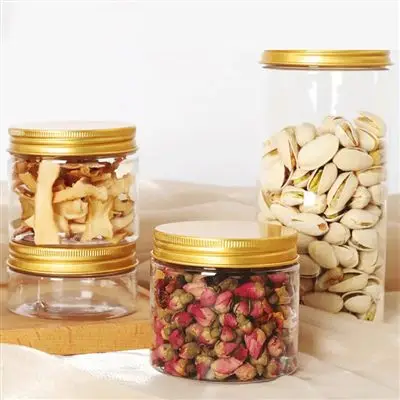
An aluminium screw lid with an induction foil liner gives a heat-bonded barrier the buyer can see was intact. A plastic lid with a pressure-sensitive liner is the cheaper option and suits shorter shelf lives or dry goods packed on the same line.
Choosing between 65 mm and 85 mm
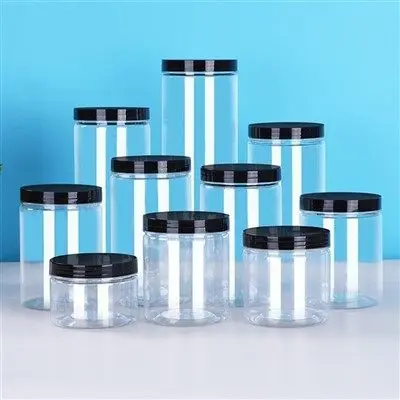
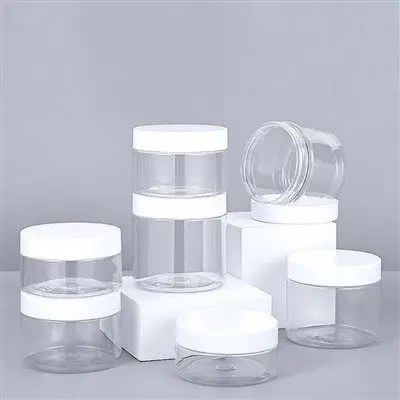
The 65 mm series covers the retail honey range: a spoon goes in, the jar sits in one hand, and the body can be tall and narrow for shelf height. The 85 mm series pushes into bulk and gift formats where the opening has to accept a larger spoon or a dipper.
Both series take the same lid materials, so the decision is about the shelf and the portion, not about availability.